

Skip to content
logo

Law Offices of Osas Iyamu, LLC

  • ServicesExpand
    • Green CardExpand
      • Green Card Overview
      • Green Cards Through Family or EmploymentExpand
        • Adjustment of Status in the United States
        • Consular Processing for an Immigrant Visa
      • Adjustment of Status (for those within the U.S.)Expand
        • Adjustment of Status Under INA § 245(a)
        • Adjustment Under INA § 245(i) for Grandfathered Applicants
        • INA § 245(k) Adjustment for Certain Employment-Based Applicants
        • Green Card for U Nonimmigrants Under INA § 245(m)
      • Humanitarian and Special ProgramsExpand
        • Asylees and Refugees Green Card
        • Green Card under Cuban Adjustment Act
        • Green Card Through Registry Under INA § 249
        • Special Immigrant Juvenile (SIJ) Status
      • Cancellation of Removal
      • Diversity Visa Lottery
      • Conditional Permanent Residence
      • Green Card Renewal
      • Green Card Holder Rights & Duties
    • Family-Based ImmigrationExpand
      • Immediate Relatives of U.S. CitizensExpand
        • Spouses, Parents, and Children
        • Widows of U.S. Citizens
      • Family Preference CategoriesExpand
        • F1: Unmarried Adult Children of U.S. Citizens (21 or older)
        • F2A: Spouses and Children (under 21) of Lawful Permanent Residents
        • F2B: Unmarried Adult Children of Lawful Permanent Residents (21 or older)
        • F3: Married Children of U.S. Citizens
        • F4: Siblings of U.S. Citizens (Sponsor must be 21 or older)
      • Adoption-Based ImmigrationExpand
        • Immigration Through International Adoption
        • Hague Convention Adoption Process
        • Non-Hague Orphan Adoption Process
        • Family-Based Immigration for Adopted Children
      • Visa PetitionsExpand
        • Visa Petition – Overview
        • Immigration Petition for Family
        • Immigration Petition for Spouse
        • Immigration Petition for Children
        • Immigration Petition for a Parent
        • Immigration Petition for Sibling
    • Employment-Based ImmigrationExpand
      • EB1: Priority WorkersExpand
        • Extraordinary Ability
        • Outstanding Professors/Researchers
        • Multinational Executives and Managers
      • EB2: Professionals with Advanced DegreesExpand
        • Advanced Degrees or Exceptional Ability
        • National Interest Waiver (NIW): Self-petition
      • EB3: Skilled Workers, Professionals, and Other WorkersExpand
        • Skilled Workers: Jobs requiring at least 2 years of experience
        • Professionals: Jobs requiring at least a Bachelor’s Degree
        • Unskilled Workers: Jobs requiring less than 2 years of experience
      • EB4: Special ImmigrantsExpand
        • Religious Workers
        • Special Immigrant Juvenile (SIJ) Status
        • Other Special Immigrant Categories: Broadcasters, retired employees of international organizations, etc.
      • EB5: Immigrant InvestorsExpand
        • Direct Investment
        • Regional Centers: Investing in Government-approved projects
      • Permanent Labor Certification
    • U.S CitizenshipExpand
      • U.S. Citizenship – Overview
      • Acquisition of Citizenship
      • Naturalization
      • Denaturalization
      • Loss of U.S Citizenship
      • Dual Citizenship
    • K VisaExpand
      • K-1 Fiancé(e) Visa
      • K-2 Non-Immigrant Visa
      • K-3 Spouse Visa and K-4 Visas for Children
    • Affidavit of SupportExpand
      • Affidavit of Support – Overview
      • Using a Household Member’s Income: Form I-864A
      • Using Assets for an Affidavit of Support
      • Joint Sponsor
      • Substitute Sponsor
      • Legal Effect Of Affidavit Of Support
      • Commencement Of Affidavit Of Support Obligation
      • Enforcement Of Affidavit Of Support Obligation
      • Termination Of Affidavit Of Support Obligation
      • Withdrawal Of An Affidavit Of Support
    • Non-Immigrant VisaExpand
      • Non-Immigrant Visa – Overview
      • R-1 Religious Worker Visa
      • Temporary Protected Status
      • F-1 Student Visa: Your Gateway to U.S. Education
    • Waivers of Inadmissibility
  • About UsExpand
    • PortfolioExpand
      • Video Gallery
      • Image Gallery
    • FAQs
  • BlogExpand
    • Case Summary
  • Contact
Schedule an immigration consultation
logo
Law Offices of Osas Iyamu, LLC

Family Preference Categories

F1: Unmarried Adult Children of U.S. Citizens (21 or older)

F1 Visa for Unmarried Adult Children of U.S. Citizens (Family First Preference)

The F1 visa category – not to be confused with the F-1 student visa – is a family-based green card category for unmarried adult children (age 21 or older) of U.S. citizens. It falls under the Family First Preference (F1) classification of U.S. immigration, which means visas are limited in number each year, and wait times can apply. In this guide, we’ll explain what the F1 visa is, who qualifies, and how to navigate the application process in a friendly, easy-to-understand way.

What is the F1 Visa (Family First Preference)?

The F1 Visa is an immigrant visa category that leads to a green card for certain family members of U.S. citizens. Specifically, it is for unmarried sons and daughters of U.S. citizens who are 21 years of age or older. In other words, if you are a U.S. citizen and have an adult child (sometimes called a son or daughter in immigration terms) who is not married, you can petition for them under the F1 category to immigrate to the United States.

Family

Key characteristics of the F1 category:

Family-Based Green Card

The F1 is a family-sponsored immigrant visa leading to lawful permanent residence (a green card) for the beneficiary.

Adult Unmarried Children

It is only for children of U.S. citizens who are 21 or older and unmarried. (If the child is under 21, they fall under the Immediate Relative category IR-2; if married, they would be in the F3 category instead.

Includes Derivative Children

If the adult son or daughter has minor children of their own, those children can usually immigrate as derivative beneficiaries on the same petition. This means grandchildren of a U.S. citizen can come along with their parents, as long as they are under 21 and unmarried.

Numerical Limits

Unlike immediate relative visas (spouses, minor children, parents of U.S. citizens), which have no annual cap, F1 visas are limited in number per year. Because demand often exceeds availability, a waiting list (backlog) builds up based on the filing date of the petition (the “priority date”). We’ll discuss wait times in detail below.

Why is it called “First Preference”? U.S. immigration law has several family preference categories (F1 through F4) for more distant relatives. F1 (First Preference) is the highest priority among the family preference visas, but it still has a quota. Being first preference means it generally has a shorter wait than F3 (married children) or F4 (siblings), but longer wait than immediate relatives (IR visas), which have no wait at all. Always note that F1 here refers to this family category, not the F-1 student visa. The similar naming is a coincidence – the F-1 student visa is an entirely different non-immigrant visa for education.

Who Qualifies for the F1 Visa?

To qualify under the F1 category, both the petitioner and the beneficiary must meet specific criteria:

  • The U.S. citizen parent: Only U.S. citizens (not green card holders) can file an F1 petition. The petitioner must be the parent of the beneficiary and must provide proof of U.S. citizenship (such as a U.S. passport or birth/naturalization certificate) when filing the petition.
  • The unmarried adult son or daughter: The person seeking the green card (beneficiary) must be 21 years of age or older and unmarried at the time of filing and when the visa is issued. Being “unmarried” means never married or currently single (divorced or widowed beneficiaries still qualify as unmarried). If the son or daughter gets married before immigrating, they no longer qualify as F1, and the petition will convert to the F3 category (married sons/daughters of U.S. citizens), which has a much longer wait. It’s very important to stay unmarried throughout the process to remain eligible for F1.
  • Petitioner – The U.S. citizen parent: Only U.S. citizens (not green card holders) can file an F1 petition. The petitioner must be the parent of the beneficiary and must provide proof of U.S. citizenship (such as a U.S. passport or birth/naturalization certificate) when filing the petition.
  • Beneficiary – The unmarried adult son or daughter: The person seeking the green card (beneficiary) must be 21 years of age or older and unmarried at the time of filing and when the visa is issued. Being “unmarried” means never married or currently single (divorced or widowed beneficiaries still qualify as unmarried). If the son or daughter gets married before immigrating, they no longer qualify as F1, and the petition will convert to the F3 category (married sons/daughters of U.S. citizens), which has a much longer wait. It’s very important to stay unmarried throughout the process to remain eligible for F1.
  • Relationship: The petitioner-child relationship must be demonstrated. Usually, a birth certificate showing the U.S. citizen as the parent is the main evidence. If the petitioner is the father and was not married to the mother, or if it involves a step-parent/step-child or adoption, additional documents (such as marriage certificates, proof of legitimation, adoption decrees, etc.) may be needed to establish the qualifying relationship.
  • No age-out for principal: Since the category is for adult children, turning 21 is a prerequisite rather than a deadline. (For comparison, a child under 21 would use an IR-2 immediate relative instead of an F1.) However, if the F1 beneficiary has their own children coming along, those grandchildren of the petitioner must remain under 21 to immigrate as derivatives.

In summary, if you are a U.S. citizen parent with an unmarried son or daughter aged 21 or above, you can sponsor them under F1. Just remember that marital status is crucial – marriage will change the category. Now, let’s look at how to apply and the steps involved.

How to Apply for the F1 Family First Preference (Visa Application Process)
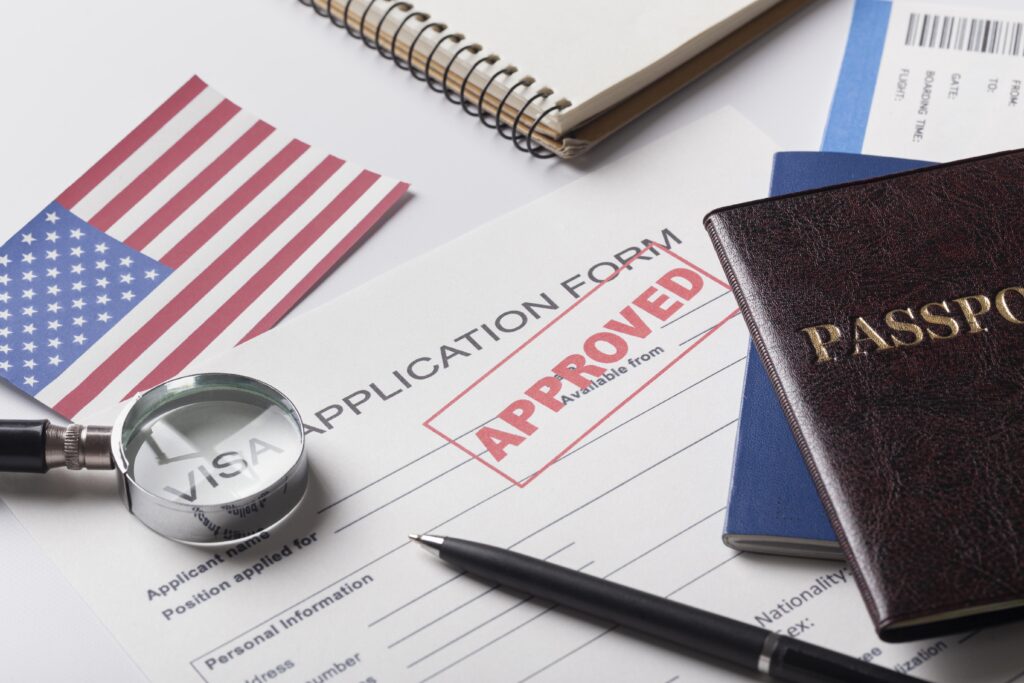

Applying for an F1 visa (green card) for your adult child is generally a two-step process: first, the family petition in the U.S., and then the visa application (either abroad through consular processing or in the U.S. through adjustment of status). Here’s a step-by-step breakdown:

  1. File Form I-130 Petition: The process starts with the U.S. citizen parent submitting Form I-130 (Petition for Alien Relative) to U.S. Citizenship and Immigration Services (USCIS). This petition proves the qualifying relationship. You will need to provide proof of U.S. citizenship (such as a copy of a passport or naturalization certificate) and evidence of the parent-child relationship (usually the child’s birth certificate listing you as the parent) along with the form. If any names have changed (due to marriage, adoption, etc.), include supporting documents for those changes. There is a filing fee for the I-130, and you should send the petition to the correct USCIS address (according to instructions) or file online. Once filed, USCIS will issue a receipt notice and later (many months or even a couple of years later) an approval notice if all goes well.

  2. Wait for Priority Date to Become Current: Because the F1 category has a limited number of visas each year, approved petitions do not result in an immediate visa if the category is backlogged. Each I-130 petition receives a priority date, which is the date USCIS received the petition. Visa numbers are issued in the order of these priority dates, so you must wait until your date is “current”—meaning it’s your turn in line. The U.S. Department of State releases a monthly Visa Bulletin listing the cutoff dates for each category and country. You will need to monitor the Visa Bulletin. For F1, there are often multi-year backlogs. (See the Timeline section below for more on wait times.) No action can be taken in this period except waiting (and keeping your address updated). If the beneficiary was in the U.S. in another status, they generally cannot adjust status until the priority date is current. Most beneficiaries reside abroad during the wait.

  3. National Visa Center (NVC) Processing: Once the priority date becomes current (or is about to in the “Dates for Filing” chart), the case moves to the National Visa Center for processing. NVC will contact you (the petitioner and beneficiary) to collect visa application documents and fees. At this stage, the beneficiary will need to submit Form DS-260 (Immigrant Visa Application) online, and the petitioner will submit Form I-864 (Affidavit of Support) to prove financial support. The NVC will provide instructions to pay the necessary fees (visa application fee and affidavit of support fee) via their online system. You’ll need to upload or send various civil documents for the beneficiary, which typically include: the beneficiary’s birth certificate, police clearance certificates from any country where they lived for a certain period, court and criminal records (if applicable), marriage or divorce papers (if applicable, though remember the beneficiary must remain unmarried for F1), and a photocopy of the biographic page of the beneficiary’s passport. The petitioner must also upload financial evidence (tax returns, job letters, etc.) with the Affidavit of Support. NVC will review all submissions for completeness. This part is often referred to as becoming “documentarily qualified.” It’s crucial to respond to any NVC notices for missing items to avoid delays.

  4. Medical Exam & Interview Preparation: While NVC is processing your documents (or once they accept them), the beneficiary will be instructed to schedule a medical examination with an authorized panel physician in their country. A medical exam is required for all immigrant visa applicants. The beneficiary should also gather the original versions of all civil documents to bring to the visa interview (birth certificates, police certificates, etc.), as well as the passport, visa interview appointment letter, and visa photos as specified by the U.S. embassy/consulate. This is also a good time to prepare for possible interview questions and ensure you understand the next steps.

  5. Visa Interview at U.S. Embassy/Consulate: NVC will schedule an interview for the beneficiary at the appropriate U.S. Embassy or Consulate in their home country (or country of residence) once an interview slot is available. At the interview, a consular officer will verify the documents and ask the beneficiary questions about their application and background. The U.S. citizen petitioner usually does not attend this interview (the beneficiary goes alone, unless it’s a minor child). The beneficiary should bring all required original documents to this interview, along with the sealed medical exam results, passport, and proof of relationship (sometimes officers like to see photos or other evidence of an ongoing relationship, though for parent-child it’s usually straightforward). If all goes well, the officer will approve the visa.

  6. Visa Issuance and U.S. Entry: After a successful interview, the applicant’s passport will be returned with an immigrant visa stamped in it. This visa is typically valid for up to 6 months (or until the medical exam expires, whichever is sooner). The immigrant must pay a USCIS Immigrant Fee online (for production of the green card) and then travel to the United States. Upon entry to the U.S., they become a Lawful Permanent Resident (Green Card holder). The physical green card will be mailed to the U.S. address provided. Congratulations – the once F1 visa beneficiary is now a U.S. permanent resident!

If the beneficiary is inside the U.S. legally when their priority date becomes current, an alternative to consular processing is filing for Adjustment of Status (Form I-485) with USCIS. The requirements for adjusting status include having maintained a lawful status (with some exceptions) and an immediately available visa number. Adjustment of Status allows the person to get the green card without leaving the U.S., and they can typically apply for a work permit and travel permit during the process. However, many F1 applicants spend the waiting period outside the U.S., so consular processing is the more common route.

F1 Family First Preference Visa Timeline and Waiting Periods

One of the biggest challenges of the F1 visa category is the waiting time. Because Congress limits the number of F1 visas per year globally (with per-country limits as well), demand often exceeds supply. This results in a queue or backlog. Your place in line is determined by that priority date (the date your I-130 was filed).
U.S Online Immigration Application System.

How long will you wait? It varies considerably based on the country of chargeability (usually the beneficiary’s country of birth) and the overall number of people ahead of you.

  • Visa Bulletin backlog: As of 2025, many F1 applicants are facing additional years of wait after petition approval. The Visa Bulletin might be processing priority dates from several years ago. In fact, for countries with high demand like Mexico and the Philippines, the wait can be extremely long – sometimes well over a decade before the priority date becomes current. Applicants from those countries often have the longest waits. Applicants from countries with fewer applicants (falling under the “All Chargeability Areas Except Listed” category in the Visa Bulletin) may have somewhat shorter waits, but it still could be multiple years.
  • The Visa Bulletin is updated monthly on the U.S. Department of State’s website. It has two key charts for family visas: “Dates for Filing” (when NVC can start processing cases) and “Final Action Dates” (when visas can actually be issued). Your priority date must be earlier than the listed date in the Final Action Dates chart to actually get a visa. If your petition is approved and your priority date is current (or very close), you’ll move forward with NVC processing; if not, you will continue to wait until the bulletin catches up to your date.
  • It’s essential to keep track of the Visa Bulletin. A good tip is to sign up for alerts or check monthly. When your priority date is close to becoming current, you should ensure you have all necessary documents ready, since NVC will ask for them.

Why the long wait? Family reunification is a big part of U.S. immigration, but annual visa caps cause bottlenecks. Each year, only 23,400 F1 visas can be issued (plus any unused visas from other family categories may roll down to F1). If more than that number of people apply (which is often the case), the overflow carries into the following year, and so on. This creates the backlog. The system can be frustrating, but knowing what to expect helps in planning.

Bottom line: Be prepared for a potentially lengthy process. Unfortunately, there isn’t a way to expedite the line placement in family preference categories. Patience and keeping your documents up to date will be key.

Documents Required – F1 Family First Preference Visa Petition and Application Checklist

Applying for an F1 immigrant visa involves two phases of documentation: the petition phase (USCIS) and the visa application phase (NVC/consular). Below is a checklist of documents you’ll typically need at each stage:

For the I-130 Petition (U.S. Citizen Petitioner should prepare):

  • Form I-130, Petition for Alien Relative: Completed and signed by the U.S. citizen petitioner (the parent).
  • Proof of Petitioner’s U.S. Citizenship: e.g., a copy of your U.S. passport, U.S. birth certificate, Consular Report of Birth Abroad, Naturalization Certificate, or Certificate of Citizenship.
  • Proof of Relationship: Usually, the beneficiary’s long-form birth certificate showing the parents’ names. If the name on the birth certificate is different from the petitioner’s current name (due to marriage or other change), include marriage certificates or name change documents. For adoptive children, include adoption decrees; for step-children, include the marriage certificate of the petitioner and the child’s biological parent (showing the marriage occurred before the child’s 18th birthday).
  • Proof of Beneficiary’s Status (if in the U.S.): If the son/daughter is currently in the U.S., provide copies of their visa and I-94 record to show lawful status. (Note: It’s okay if they are abroad – then this isn’t applicable.)
  • Two Passport-Style Photos: Some petitions (if filed by mail) require passport photos of the petitioner and beneficiary. Check the I-130 instructions for photo requirements.
  • Filing Fee: The I-130 filing fee (paid by check or money order to the U.S. Department of Homeland Security, or paid online if filing electronically).

For the Immigrant Visa Application (Beneficiary’s stage via NVC/Consulate):

Once the petition is approved and a visa is available, the beneficiary will need to provide several documents for the visa processing:

  • Form DS-260 Confirmation: After completing the DS-260 online immigrant visa application, print the confirmation page to include in your documents.
  • Form I-864, Affidavit of Support: Completed by the petitioner (and any joint sponsor or household member, if required). This form shows that the petitioner has sufficient financial means to support the beneficiary so they will not become a public charge. Include supporting financial evidence: tax returns, W-2s, employment letter, pay stubs, etc. (This is submitted to NVC, but bring a copy to the interview as well.)
  • Beneficiary’s Valid Passport: Must be unexpired and valid for at least 6 months beyond the intended entry to the U.S. You will later submit the passport for the visa stamp, so ensure it’s in order.
  • Birth Certificates: Original birth certificate of the beneficiary (and any derivative children) plus photocopies. If not in English, an official translation will be required.
  • Police Certificates: Required from every country where the beneficiary lived for more than 6 or 12 months after a certain age (usually 16), as instructed by the consulate. The police certificate is basically a criminal background record check. If the beneficiary has no criminal record, the certificate will state no record found. These must be obtained within a specific time before the interview (usually within a year, depending on the country).
  • Court and Prison Records: If the beneficiary has any criminal history, certified court records and prison records for all arrests/convictions are required, even if they were later expunged.
  • Military Records: If the beneficiary served in the military of any country, military records may be required.
  • Marriage/Divorce Certificates: Not applicable for the principal beneficiary (since they must be unmarried for F1). However, if the beneficiary was previously married, they should provide divorce decrees or death certificates to prove those marriages ended. And if any derivative child is married (unlikely as derivatives must be minor/unmarried), they would no longer qualify. Essentially, you need to prove your current unmarried status.
  • Adoption documents: If applicable (in cases of adopted beneficiaries or derivative children).
  • Passport-style Photographs: Typically two (2) color photographs of the beneficiary (and any derivative applicants) meeting U.S. visa photo specifications.
  • Medical Exam Results: The beneficiary (and any accompanying children) must undergo a medical examination by an approved panel physician before the interview. The results are often given in a sealed envelope, which you bring to the interview (do not open it!). Some physicians now send results electronically directly to the embassy/consulate.
  • Visa Fee Receipts: Proof of payment of the NVC immigrant visa fee and affidavit of support fee (if applicable). Usually, if you’ve paid online through the CEAC portal, it’s recorded, but it’s good to have a copy of the receipt or confirmation.
  • Interview Appointment Letter: NVC will send an appointment notice when the interview is scheduled. Bring this letter to the consulate on the interview day.
  • Supporting Relationship Evidence (optional): While not always requested for parent-child cases, it doesn’t hurt for the beneficiary to carry some proof of ongoing relationship (photos with their parent, correspondence, etc.), in case the officer wants to verify bona fides. Again, for a biological parent-child with a valid birth certificate, this is rarely an issue, like it is for marriage-based cases. Still, it’s a “nice to have.”

Keep all original documents organized in a folder for the interview. The consular officer will want to see originals of civil documents (they will return them to you). If any required document is missing, your case could be delayed or refused under administrative processing until you provide it. The NVC typically ensures you’ve submitted scanned copies of everything; the interview is about verification and final checks.

Tips for a Successful F1 Family First Preference Visa Application

Navigating the F1 visa process can be complex and lengthy. Here are some useful tips to improve your experience and avoid pitfalls:

  • Start Early and Plan Ahead: Because wait times are long, it’s best to file the I-130 petition as early as possible once you know you’re eligible. Getting a priority date locked in sooner can make a big difference down the line. Also, make sure passports and documents are kept up to date while you wait.
  • Stay Informed (Visa Bulletin & Case Status): Monitor the Visa Bulletin regularly to track the progress of your priority date. When your date gets close, be prepared to act quickly on NVC steps. Additionally, use USCIS online tools to check your I-130 case status. At the same time, it’s pending and USCIS processing times to get an idea of how long the petition stage might take. Being informed will reduce anxiety and ensure you don’t miss any updates.
  • Maintain Updated Contact Information: If you move or change contact details during the multi-year process, update USCIS (for the I-130) and later the NVC with your new address or email. Important notices might be mailed to the last reported address. You can update USCIS using their online change of address tool. For NVC, you can use their online inquiry form to update contact info. Missing an NVC notice because of an old address can seriously delay your case.
  • Organize and Keep Copies: Keep a complete copy of every form and document you submit, including the I-130 packet and the civil docs to NVC. This helps if anything gets lost and is also useful when preparing for the interview. Being organized also lets you quickly respond if NVC or the consulate asks for something again.
  • Don’t Marry Before Immigrating: This is worth repeating – the F1 category is only for unmarried sons/daughters. If the beneficiary marries before they get their green card, the petition will change to F3 (married category) and significantly delay the case (F3 waits are typically longer). If you plan to marry, it may be wise to wait until after you immigrate to the U.S. (when you could alternatively sponsor your new spouse later as a green card holder). If the beneficiary does get married, notify NVC or the consulate as soon as possible, as the visa category and processing will need to be adjusted.
  • Prepare Financially: The petitioner must show they can financially support the beneficiary at 125% of the U.S. poverty line on Form I-864. Plan ahead to meet this requirement. If the petitioner’s income is insufficient, consider arranging a joint sponsor (perhaps another relative or friend who is a U.S. citizen or resident) who can also commit to support. Organize at least 3 years of tax documents for the affidavit of support. Financial issues are a common cause of visa delays (if the consulate finds the affidavit inadequate).
  • Respond Promptly to Any Requests: If USCIS issues a Request for Evidence (RFE) on the I-130 (for missing or unclear documents), or if NVC flags missing items, respond as quickly and thoroughly as possible. Delays in responding will prolong your case. Likewise, schedule your medical exam as soon as you receive the instructions, to avoid cutting it too close to the interview date.
  • Be Honest and Consistent: Fill out all forms truthfully and completely. Inconsistencies between forms (I-130, DS-260, etc.) or any attempt to conceal information can lead to problems. Remember that the consular officer will review the whole case file. If there are sensitive issues (e.g., past visa overstays, criminal history), it’s better to disclose them upfront as required, and consult an immigration attorney if you think there might be admissibility issues.
  • Plan Your Life but Be Ready: It’s hard waiting for years without a precise date. While you wait, continue with life–work, study, etc., in your home country or current country. But when your priority date is close, avoid long-term commitments that could conflict with immigrating (for example, avoid signing a multi-year work contract abroad if you might need to relocate within a year). Also, do not sell properties or resign from jobs until your visa is actually approved – visa issuance is very likely, but never 100% guaranteed until you have it.
  • Entering the U.S. on a Visit (Caution): Beneficiaries often wonder if they can visit the U.S. on a tourist visa or ESTA while their F1 immigrant case is pending. It is legally possible to visit, but be aware that you must convince immigration officers you’ll return to your home country. Having an immigrant petition can raise questions about your intentions. If you do attempt to visit the U.S., carry evidence of ties to your home country (job, residence, etc.) and be prepared for possible additional questioning at the port of entry. Never misrepresent your immigrant petition – always answer honestly if asked. If a visitor visa is denied or you are turned away at entry, depending on the reason for denial, it may not directly harm your F1 petition, but it’s an inconvenience and expense, so weigh it carefully.
  • Use Official Resources: Rely on official information from USCIS and the Department of State. When in doubt, these resources or a qualified immigration attorney can clarify the process. Avoid advice from unverified sources, as immigration rules can change, and every case may have unique factors.

With careful preparation and patience, you’ll maximize your chances of a smooth process. 

Frequently Asked Question

It really depends on your country and the individual case. In general, expect multiple years. The I-130 petition approval alone can take a couple of years in some cases. After that, the wait for a visa number could be a few more years – or longer if you’re from a country with many applicants (e.g. Mexico, Philippines). For many people, the average wait time is anywhere from around 9 years. But for others (especially certain countries), it stretches beyond a decade. Always check the latest Visa Bulletin to gauge current wait times for your priority date.

No, they are entirely different. It’s unfortunate that the terminology sounds alike. The F1 discussed here is an immigrant visa category (family first preference) for adult children of U.S. citizens, which leads to a green card. The F-1 visa (with a hyphen) is a non-immigrant visa for international students attending academic programs in the U.S. They share a similar name by coincidence only. If you tell someone “I’m applying for an F1 visa to immigrate through my parent,” make sure to clarify it’s the family-based category, not a student visa.

Yes, if you have unmarried children under 21, they can be included as derivative beneficiaries on your F1 petition. The F1 category is defined as “unmarried sons and daughters of U.S. citizens and their minor children, if any”. This means, for example, if you are the 25-year-old unmarried beneficiary and you have a 5-year-old child, your child can get a visa as well when your priority date is reached. Just make sure to list your children on all forms (the I-130 and DS-260) so the consulate knows to process them too. Keep in mind that those children must remain under 21 and unmarried by the time of visa issuance. If they approach 21 during the wait, the Child Status Protection Act (CSPA) might protect them by locking in their age based on the petition filing date, but consult an expert in that case. Each derivative child will also need an individual visa fee and medical exam, etc., but they don’t need separate I-130 petitions.

Getting married would remove your eligibility for F1, because F1 is only for unmarried sons/daughters. If you marry, one of two things can happen: – If your petitioner is a U.S. citizen (which is the case for F1), your petition doesn’t die, but it automatically converts to the F3 category (Family Third Preference) for married sons and daughters of U.S. citizens. You keep your original priority date, but now you’re in a different (usually slower) line. F3 has a separate (often longer) backlog and the annual visa limit is also 23,400, but demand is high. This will very likely add many more years to your wait. – If your petitioner were a permanent resident (which would have originally made you F2B), their petition actually cannot continue if you marry because permanent residents cannot sponsor married children at all. (However, in F1’s case the petitioner is a citizen, so this scenario doesn’t apply directly, but it’s worth noting for others.) In short, marriage will significantly delay or derail the process. If you do get married, inform the NVC or consulate promptly to update your case. Your spouse and any children could then be added as derivatives in F3 (since married sons/daughters’ spouses and minor kids can also immigrate with them in that category), but again, F3 is a much longer wait. Many beneficiaries therefore choose to postpone marriage until after immigrating.

Waiting for an immigrant visa does not give you any interim rights to work or live in the U.S. You’ll have to wait until you actually become a permanent resident to work and reside freely in America. While the F1 petition is pending or the priority date is backlogged, the beneficiary is typically outside the U.S. or if inside, on a separate non-immigrant status. If you want to visit the U.S. temporarily, you would need to qualify for a visitor visa (B2) or other non-immigrant visa on your own merits. This can be challenging because having an immigrant petition indicates immigrant intent, which a tourist visa explicitly forbids. It’s not impossible – many people do visit their parents on a tourist visa during the wait – but it requires showing strong ties to your home country and convincing the officer you’ll return. Working in the U.S. is not allowed on a tourist visa or ESTA. And you cannot obtain a U.S. work permit until you either adjust status (when a visa is available) or actually get the immigrant visa approval. Once you enter the U.S. on the immigrant visa and become a green card holder, you can work, study, and live in the U.S. permanently without restrictions.

 It’s not required to have a lawyer – many people successfully navigate the family-based green card process on their own by carefully following the instructions. USCIS and NVC provide detailed guides, and this category is typically straightforward if the relationship is clear and the beneficiary has no inadmissibility issues. However, the process does span several years and involves a lot of paperwork. You might consider consulting an immigration attorney if: – You have a complicated family situation or missing documents (for example, no birth certificate, or a name mismatch that might require additional proof). – The beneficiary has criminal or immigration history (e.g., past overstays, deportations, criminal convictions) that could affect the case. – You find the forms confusing or are worried about making mistakes that could delay the case. An attorney can also help with strategies, for instance, if the petitioner was originally a green card holder and filed an F2B, but then naturalized to a citizen (converting it to F1), they could advise whether opting out of the conversion is beneficial in your situation. While most straightforward cases don’t require heavy legal involvement, peace of mind and guidance can be worth it. At the very least, make use of the free information from official sources and communities, and double-check requirements at each step.

This is a delicate situation. Normally, an I-130 petition is automatically revoked if the petitioner dies before the beneficiary immigrates, because the family relationship for immigration ends with the death of the petitioner. However, there are some forms of relief. In certain cases, the law allows a request for “humanitarian reinstatement” of the petition. The beneficiary would need to have a qualifying relative (like another U.S. citizen or resident family member) who can serve as a substitute sponsor for the affidavit of support and submit a request to USCIS to reinstate the petition despite the petitioner’s death. USCIS may, at its discretion, reinstate the petition if it finds humanitarian reasons to do so. Additionally, if the beneficiary was residing in the U.S. when the petitioner died, Section 204(l) of the Immigration and Nationality Act might allow the process to continue. These are complex scenarios requiring legal guidance. The main point is, while the death of a petitioner is a serious complication, it may not always be the absolute end of the immigration process – but you’d need to take extra steps and meet certain criteria to continue.

 Yes. When you immigrate in the F1 Family First Preference category, you become a Lawful Permanent Resident (LPR), commonly called a green card holder. This status is permanent as long as you maintain it (by living in the U.S. and not breaking certain laws). After you receive your green card, you have the same rights and responsibilities as other permanent residents. Typically, after 5 years of being a permanent resident, you become eligible to apply for U.S. citizenship through naturalization (so long as you meet the continuous residence, physical presence, and other criteria). The path from F1 beneficiary to citizen is a long journey, but many do eventually naturalize. And once you are a U.S. citizen, you could then sponsor other relatives (for example, your own spouse or children) under the appropriate categories, completing the cycle of family reunification.

You’re not just paying for forms—you’re investing in experienced legal advocacy.

Need professional assistance with your immigration journey?
We’re here to help from start to finish. Contact us today!

Schedule an immigration consultation

Services

  • Green Card
  • Family-Based Immigration
  • Employment Based Immigration
  • U.S Citizenship
  • K Visa
  • Affidavit of Support
  • Non-Immigrant Visa
  • Waivers of Inadmissibility
  • Green Card Overview
  • Green Cards Through Family or Employment
  • Adjustment of Status in the United States
  • Consular Processing for an Immigrant Visa
  • Adjustment of Status (for those within the U.S.)
  • Adjustment of Status Under INA § 245(a)
  • Adjustment Under INA § 245(i) for Grandfathered Applicants
  • INA § 245(k) Adjustment for Certain Employment-Based Applicants
  • Green Card for U Nonimmigrants Under INA § 245(m)
  • Humanitarian and Special Programs
  • Asylees and Refugees Green Card
  • Green Card under Cuban Adjustment Act
  • Green Card Through Registry Under INA § 249
  • Special Immigrant Juvenile (SIJ) Status
  • Cancellation of Removal
  • Diversity Visa Lottery
  • Conditional Permanent Residence
  • Green Card Renewal
  • Green Card Holder Rights & Duties
  • Immediate Relatives of U.S. Citizens
  • Spouses, Parents, and Children
  • Widows of U.S. Citizens
  • Family Preference Categories
  • F1: Unmarried Adult Children of U.S. Citizens (21 or older)
  • F2A: Spouses and Children (under 21) of Lawful Permanent Residents
  • F2B: Unmarried Adult Children of Lawful Permanent Residents (21 or older)
  • F3: Married Children of U.S. Citizens
  • F4: Siblings of U.S. Citizens (Sponsor must be 21 or older)
  • Adoption-Based Immigration
  • Immigration Through International Adoption
  • Hague Convention Adoption Process
  • Non-Hague Orphan Adoption Process
  • Family-Based Immigration for Adopted Children
  • Visa Petitions
  • Visa Petition – Overview
  • Immigration Petition for Family
  • Immigration Petition for Spouse
  • Immigration Petition for Children
  • Immigration Petition for a Parent
  • Immigration Petition for Sibling
  • EB1: Priority Workers
  • Extraordinary Ability
  • Outstanding Professors/Researchers
  • Multinational Executives and Managers
  • EB2: Professionals with Advanced Degrees
  • Advanced Degrees or Exceptional Ability
  • National Interest Waiver (NIW): Self-petition
  • EB3: Skilled Workers, Professionals, and Other Workers
  • Skilled Workers: Jobs requiring at least 2 years of experience
  • Professionals: Jobs requiring at least a Bachelor’s Degree
  • Unskilled Workers: Jobs requiring less than 2 years of experience
  • EB4: Special Immigrants
  • Religious Workers
  • Special Immigrant Juvenile (SIJ) Status
  • Other Special Immigrant Categories: Broadcasters, retired employees of international organizations, etc.
  • EB5: Immigrant Investors
  • Direct Investment
  • Regional Centers: Investing in Government-approved projects
  • Permanent Labor Certification
  • U.S. Citizenship – Overview
  • Acquisition of Citizenship
  • Naturalization
  • Denaturalization
  • Loss of U.S Citizenship
  • Dual Citizenship
  • K-1 Fiance(e) Visa
  • K-2 Non-Immigrant Visa
  • K-3/K-4 Nonimmigrant Visas
  • Affidavit of Support – Overview
  • Use of Co-Sponsor’s Income
  • Use Of Assets
  • Joint Sponsor
  • Substitute Sponsor
  • Legal Effect Of Affidavit Of Support
  • Commencement Of Affidavit Of Support Obligation
  • Enforcement Of Affidavit Of Support Obligation
  • Termination Of Affidavit Of Support Obligation
  • Withdrawal Of An Affidavit Of Support
  • Non-Immigrant Visa – Overview
  • Temporary Protected Status
  • F-1 Student Visa: Your Gateway to U.S. Education
  • Waivers of Inadmissibility
logo

Law Offices of Osas Iyamu, LLC

Immigration Law Is All We Do!
Distance Is No Barrier, Call Us Now!

Services

Green Card
Family-Based Immigration
Employment-Based Immigration
U.S. Citizenship
K Visa
Affidavit of Support
Non-Immigrant Visa
Waivers of Inadmissibility

Explore

Services
About us
Testimonials
Portfolio
FAQs
Blog
Case Summary
Contact

Contact

6112 SW State Rd 200, Ocala, FL 34476, United States

(800) 974-6480
(352) 237-2403


Home | Privacy Policy | Contact

Copyright © 2025 Law Offices of Osas Iyamu, LLC. All Rights Reserved.

Message Call Us Consult

Scroll to top
  • Services
    • Green Card
      • Green Card Overview
      • Green Cards Through Family or Employment
        • Adjustment of Status in the United States
        • Consular Processing for an Immigrant Visa
      • Adjustment of Status (for those within the U.S.)
        • Adjustment of Status Under INA § 245(a)
        • Adjustment Under INA § 245(i) for Grandfathered Applicants
        • INA § 245(k) Adjustment for Certain Employment-Based Applicants
        • Green Card for U Nonimmigrants Under INA § 245(m)
      • Humanitarian and Special Programs
        • Asylees and Refugees Green Card
        • Green Card under Cuban Adjustment Act
        • Green Card Through Registry Under INA § 249
        • Special Immigrant Juvenile (SIJ) Status
      • Cancellation of Removal
      • Diversity Visa Lottery
      • Conditional Permanent Residence
      • Green Card Renewal
      • Green Card Holder Rights & Duties
    • Family-Based Immigration
      • Immediate Relatives of U.S. Citizens
        • Spouses, Parents, and Children
        • Widows of U.S. Citizens
      • Family Preference Categories
        • F1: Unmarried Adult Children of U.S. Citizens (21 or older)
        • F2A: Spouses and Children (under 21) of Lawful Permanent Residents
        • F2B: Unmarried Adult Children of Lawful Permanent Residents (21 or older)
        • F3: Married Children of U.S. Citizens
        • F4: Siblings of U.S. Citizens (Sponsor must be 21 or older)
      • Adoption-Based Immigration
        • Immigration Through International Adoption
        • Hague Convention Adoption Process
        • Non-Hague Orphan Adoption Process
        • Family-Based Immigration for Adopted Children
      • Visa Petitions
        • Visa Petition – Overview
        • Immigration Petition for Family
        • Immigration Petition for Spouse
        • Immigration Petition for Children
        • Immigration Petition for a Parent
        • Immigration Petition for Sibling
    • Employment-Based Immigration
      • EB1: Priority Workers
        • Extraordinary Ability
        • Outstanding Professors/Researchers
        • Multinational Executives and Managers
      • EB2: Professionals with Advanced Degrees
        • Advanced Degrees or Exceptional Ability
        • National Interest Waiver (NIW): Self-petition
      • EB3: Skilled Workers, Professionals, and Other Workers
        • Skilled Workers: Jobs requiring at least 2 years of experience
        • Professionals: Jobs requiring at least a Bachelor’s Degree
        • Unskilled Workers: Jobs requiring less than 2 years of experience
      • EB4: Special Immigrants
        • Religious Workers
        • Special Immigrant Juvenile (SIJ) Status
        • Other Special Immigrant Categories: Broadcasters, retired employees of international organizations, etc.
      • EB5: Immigrant Investors
        • Direct Investment
        • Regional Centers: Investing in Government-approved projects
      • Permanent Labor Certification
    • U.S Citizenship
      • U.S. Citizenship – Overview
      • Acquisition of Citizenship
      • Naturalization
      • Denaturalization
      • Loss of U.S Citizenship
      • Dual Citizenship
    • K Visa
      • K-1 Fiancé(e) Visa
      • K-2 Non-Immigrant Visa
      • K-3 Spouse Visa and K-4 Visas for Children
    • Affidavit of Support
      • Affidavit of Support – Overview
      • Using a Household Member’s Income: Form I-864A
      • Using Assets for an Affidavit of Support
      • Joint Sponsor
      • Substitute Sponsor
      • Legal Effect Of Affidavit Of Support
      • Commencement Of Affidavit Of Support Obligation
      • Enforcement Of Affidavit Of Support Obligation
      • Termination Of Affidavit Of Support Obligation
      • Withdrawal Of An Affidavit Of Support
    • Non-Immigrant Visa
      • Non-Immigrant Visa – Overview
      • R-1 Religious Worker Visa
      • Temporary Protected Status
      • F-1 Student Visa: Your Gateway to U.S. Education
    • Waivers of Inadmissibility
  • About Us
    • Portfolio
      • Video Gallery
      • Image Gallery
    • FAQs
  • Blog
    • Case Summary
  • Contact
Search