Matter of Y-M-B-: Asylum Fraud and Flight Risk in Immigration Bond Cases

In Matter of Y-M-B-, the Board of Immigration Appeals (BIA) held that the respondent had not shown that he was unlikely to flee or disregard future immigration orders. The Board relied on his admitted asylum-related fraud, unresolved identity concerns, and weakened prospects for immigration relief after an immigration judge denied his asylum application and related protection. It vacated a $12,000 bond order and directed that he remain detained without bond.
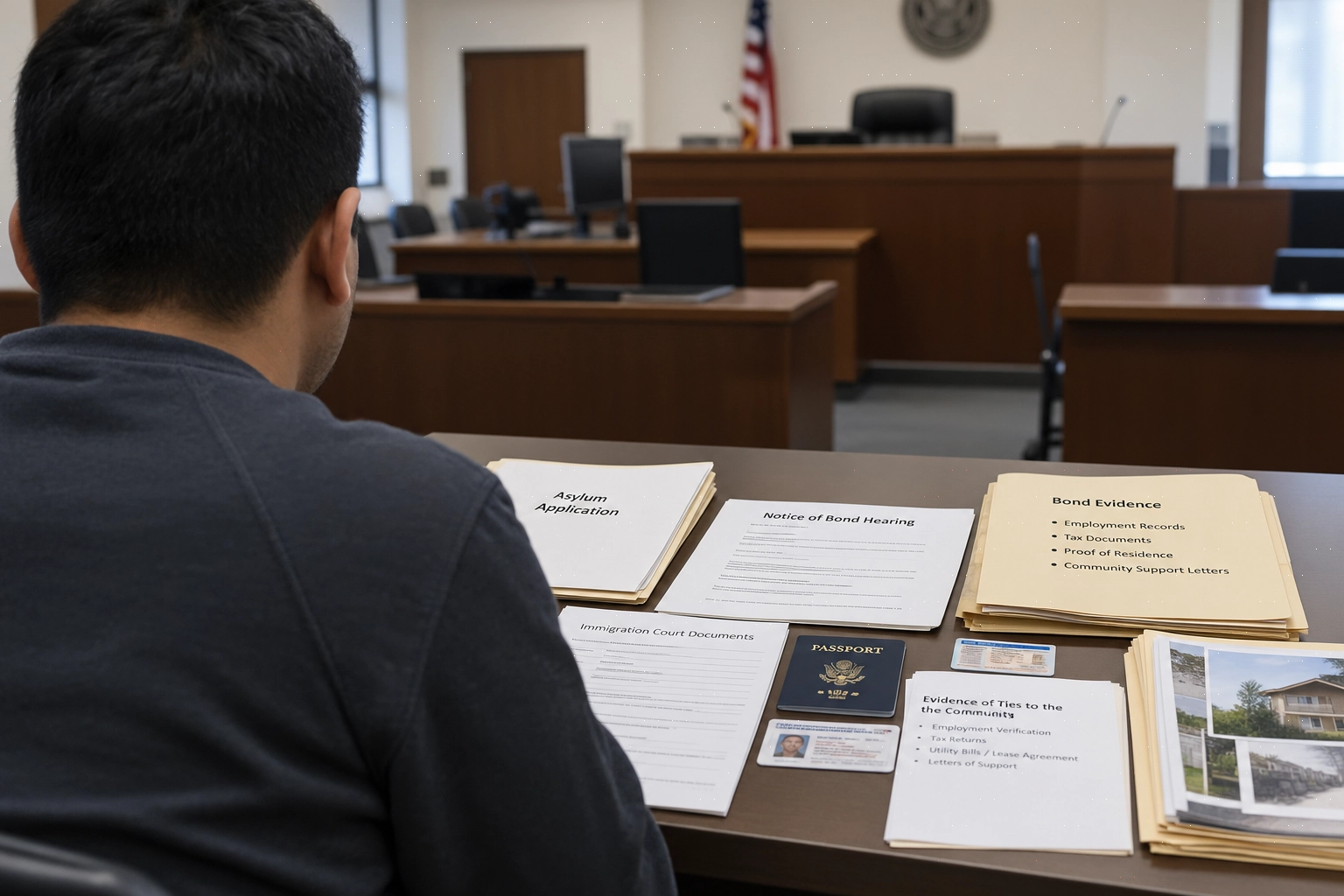
The decision does not mean that every asylum denial or inconsistency prevents release. It shows how serious adverse evidence can outweigh favorable factors such as stable housing, employment, tax payments, community support, prior hearing attendance, and the absence of a criminal record.
Read the official BIA decision in Matter of Y-M-B-.
Case: Matter of Y-M-B-, 30 I&N Dec. 99 (BIA 2026), Interim Decision #4251
Deciding body: Board of Immigration Appeals
Decision date: August 21, 2026
Precedent designation: September 24, 2026—the Attorney General directed that the BIA panel decision be published as precedent under 8 C.F.R. § 1003.1(g)(3)
Legal issue: Whether the respondent proved that he was not a flight risk and that release conditions could reasonably ensure his future appearance and compliance
Outcome: DHS’s appeal sustained; the $12,000 bond order vacated; the respondent ordered detained without bond
Precedential effect: Published BIA precedent applicable in immigration proceedings nationwide, subject to controlling federal-court authority and later agency or judicial action
Why Did DHS Appeal the $12,000 Bond Order?
The respondent entered the United States without lawful authorization and applied for asylum and related protection. His application did not disclose that he had traveled through Greece and attempted to obtain lawful status there. The omitted information was significant because Greece had granted him asylum under a different name and date of birth.
After the Department of Homeland Security produced evidence concerning the Greek asylum grant, the respondent submitted an affidavit acknowledging that the omission was intentional. He blamed his former attorney and stated that he was exploring a possible ineffective-assistance claim. The immigration judge treated that possibility as insufficient to overcome the negative evidence then in the record.
The respondent’s applications for asylum and related protection had also been denied on February 13, 2025. Although his appeal from that denial remained pending, this was the only immigration relief he had pursued.
In the separate custody proceeding, the immigration judge ordered his release on a $12,000 bond on April 20, 2026. The judge later issued a written explanation for granting bond. DHS appealed, arguing that the respondent had not shown that he was unlikely to flee or disregard future immigration orders.
What Favorable Evidence Did the Respondent Present?
The record contained meaningful evidence supporting release. The respondent had:
- No criminal history;
- A fixed address in the United States;
- Proof of authorized employment;
- Evidence that he had paid taxes;
- Letters of support; and
- A record of attending his immigration hearings.
The BIA did not disregard those factors. It weighed them against the fraud, identity concerns, denial of relief, and reduced likelihood of success in the underlying removal case. The Board concluded that the negative evidence carried greater weight.
What Question Did the BIA Decide?
The issue was whether the respondent carried his burden of proving that he was not a flight risk and that a monetary bond or another release condition could reasonably ensure his appearance and compliance with the immigration process.
In reviewing the bond decision, the BIA applied two different standards:
- It reviewed the immigration judge’s underlying factual findings for clear error.
- It reviewed the ultimate judgment about flight risk independently, or de novo.
After conducting that review, the Board held that the respondent had not met his burden. It sustained DHS’s appeal, vacated the release order, and directed that he be detained without bond.
Why Did the Asylum Fraud Matter to the Bond Decision?
The Board treated the intentional omission as more than a mistake in completing an immigration form. The undisclosed travel and Greek asylum grant led to questions about:
- The respondent’s true identity;
- The reliability of his statements;
- Possible statutory barriers to immigration relief; and
- His willingness to provide inaccurate or incomplete information to obtain an immigration benefit.
The BIA relied on its earlier decision in Matter of A-W-M-K-, 29 I&N Dec. 805 (BIA 2026), which recognizes that inconsistent representations to immigration officials can be a serious adverse factor in evaluating flight risk. The Board reasoned that past deliberate dishonesty with immigration authorities may bear directly on whether the government and the immigration court can rely on a person to comply with future proceedings and orders.
The decision should not be read as treating every omission or inconsistency as fraud. In Y-M-B-, the respondent admitted that the omission was intentional, and DHS had produced evidence of the prior asylum grant under a different identity. Those facts were central to the result.
How Did the Denial of Asylum Affect the Flight-Risk Analysis?
The immigration judge denied the respondent’s asylum application and related requests for protection on February 13, 2025. His appeal from that denial was still pending when the BIA decided the separate bond appeal.
In reviewing bond, the BIA considered whether the respondent had a realistic prospect of obtaining immigration relief. It found that the earlier denial, together with the newly discovered fraud, conflicting identity information, and possible legal barriers to relief, made success on appeal unlikely.
The BIA did not decide the asylum appeal in this bond decision. It considered the strength of that appeal only as part of assessing whether the respondent would attend future proceedings and comply with a future removal order.
Why Was Prior Attendance at Hearings Not Enough?
The respondent emphasized that he had never missed an immigration hearing. The Board recognized that history but concluded that appearing while pursuing relief is not necessarily the same as complying after relief has been denied and removal becomes more likely.
Relying on Matter of A-L-S-, 29 I&N Dec. 794 (BIA 2026), the BIA explained that flight risk includes two related questions:
- Is the person likely to appear at future hearings?
- Is the person likely to comply with future immigration-court orders, including a final removal order?
Past attendance remains helpful evidence. Matter of Y-M-B-, however, establishes that it is not conclusive. An immigration judge may consider whether later developments—such as the denial of relief or discovery of fraud—have changed the person’s incentive to comply.
Why Did the BIA Reject Both Monetary and Nonmonetary Conditions?
The Board weighed the respondent’s positive equities against the aggravating circumstances and concluded that neither a monetary bond nor a nonmonetary release condition would sufficiently address the risk.
The Board tied that conclusion to the particular record. The BIA expressed little confidence that the respondent would comply with a future adverse order because he intentionally omitted material facts, which were discovered only after his asylum application had already been adjudicated.
The opinion does not identify a bond amount that would have been sufficient or prescribe a universal set of release conditions. Instead, it concludes that no available condition was adequate on the facts presented.
What Does “Attorney General Designation” Mean?
The phrase does not mean that the Attorney General personally decided the bond appeal or wrote the BIA’s legal analysis.
A three-member BIA panel decided the case on August 21, 2026. On September 24, 2026, the Attorney General issued Order No. 7208-2026 directing that the panel’s decision be published and treated as precedent in proceedings involving the same issue or issues. The authority for that action appears in 8 C.F.R. § 1003.1(g)(3).
In practical terms, the designation changed the decision from a ruling resolving one respondent’s appeal into published administrative precedent. Immigration judges, the BIA, and DHS officers must apply the precedent in cases involving the same legal issues unless the BIA, the Attorney General, or a controlling federal court later modifies or overrules it.
What Does Matter of Y-M-B- Mean for Immigration Bond Cases?
Traditional community ties may not be sufficient
Evidence of residence, employment, tax compliance, family or community support, and prior attendance remains important. But a bond presentation should also address any evidence affecting credibility, identity, eligibility for relief, or willingness to comply with a future order.
The merits record can affect custody
A custody case cannot always be prepared separately from the underlying removal proceeding. If relief has already been denied, counsel may need to explain the pending appeal, identify substantial appellate issues, and demonstrate why the respondent will continue to comply even if the ultimate result is unfavorable.
Prior immigration histories should be reviewed carefully
Applicants and counsel should compare prior immigration applications, overseas protection records, travel histories, names, dates of birth, and identity documents before a bond hearing. Investigate and address discrepancies directly rather than leaving them for DHS to discover and characterize.
An ineffective-assistance allegation requires more than speculation
The respondent’s statement that he was exploring a claim against former counsel did not neutralize the admitted intentional omission. Where prior counsel may be responsible for an error, the claim should be evaluated promptly, supported by the record, and pursued through the appropriate legal procedure. Merely suggesting that an ineffective-assistance claim may later be filed may carry little weight.
What Did the BIA Not Decide?
The limits of the opinion are important:
- It does not hold that every asylum denial establishes flight risk.
- It does not hold that every inconsistency or omission constitutes fraud.
- It does not create an automatic no-bond rule for respondents accused of misrepresentation.
- It does not decide the respondent’s pending appeal from the denial of asylum and related protection.
- It does not expand an immigration judge’s bond jurisdiction where detention is governed by a statute or regulation that does not permit ordinary custody redetermination.
- It addresses flight risk, not whether the respondent was a danger to the community.
The decision is a fact-specific application of the respondent’s burden. Its broader importance lies in the factors the BIA considered relevant and the weight it allowed adjudicators to place on deliberate fraud, identity concerns, weakened prospects for relief, and likely compliance with future orders.
Why Does the Decision Matter in Florida and Nationwide?
Because Matter of Y-M-B- is a published BIA precedent, it applies in immigration-court and BIA proceedings throughout the United States, including Florida. The BIA explains that its precedent decisions bind immigration judges and DHS officers unless the Attorney General or a federal court modifies or overrules them.
Federal-court review remains subject to the governing detention statute, the type of claim presented, and controlling Supreme Court and circuit precedent. In Florida, evaluate questions of federal judicial review and constitutional or statutory detention challenges under applicable Eleventh Circuit law.
The Central Lesson From Matter of Y-M-B-
Matter of Y-M-B- reinforces that immigration bond decisions consider future compliance as well as past attendance. Here, favorable ties did not overcome intentional asylum-related fraud, conflicting identity information, and weakened prospects for relief. The BIA concluded that no bond or other release condition adequately addressed the flight risk.
Schedule an immigration consultation
Immigration bond decisions can depend on prior applications, statements to immigration officials, family and community ties, and the realistic prospects for relief from removal.
Schedule an immigration consultation with Immigration Attorney Osas Iyamu at the Law Offices of Osas Iyamu, LLC, to discuss how these issues may affect you or a detained family member.
Toll-free: 1-800-974-6480
Local office / WhatsApp: 352-237-2403
This article discusses a published immigration decision for educational purposes. It does not describe a case handled by our office and is not individualized legal advice. Immigration detention, bond jurisdiction, and eligibility for release depend on the governing law, procedural posture, jurisdiction, individual facts, and any later legal developments. Reading this article does not create an attorney-client relationship.