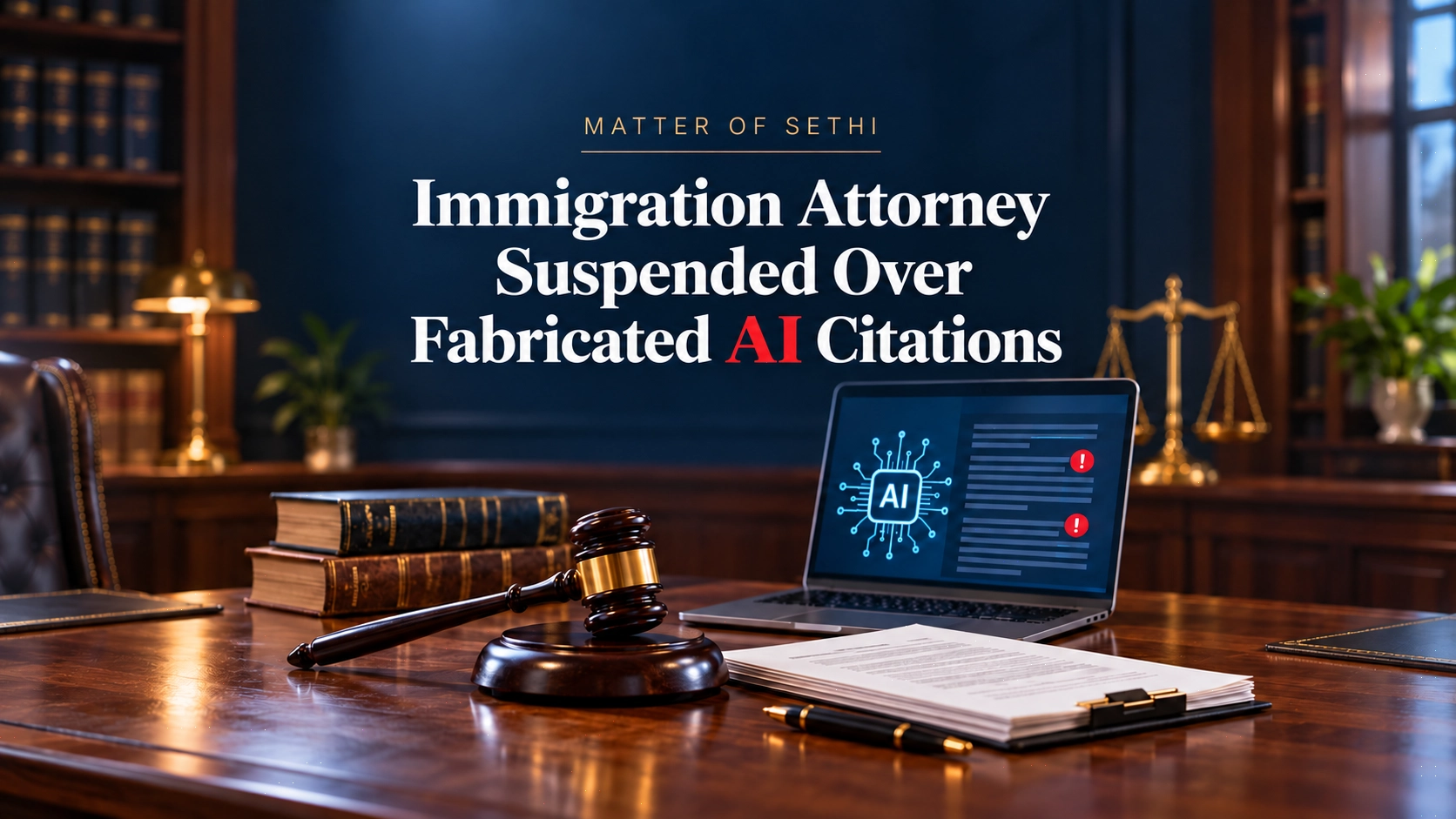
Matter of Sethi: Immigration Attorney Suspended Over Fabricated AI Citations

Case: Matter of Sethi, 30 I&N Dec. 112 (BIA 2026)
Precedent designation: October 1, 2026
In Matter of Sethi, the Board of Immigration Appeals (BIA) imposed attorney discipline following an earlier suspension by the U.S. Court of Appeals for the Ninth Circuit. The BIA proceeding arose from that federal court suspension, not from a new incident of misconduct before the BIA.
The misconduct that led to the Ninth Circuit suspension
Attorney Mike Singh Sethi submitted briefs containing nonexistent cases, quotations that did not appear in the cited opinions, and inaccurate descriptions of actual legal decisions. These problems involved fabricated or inaccurate material produced by artificial intelligence.
The Ninth Circuit also examined how Sethi responded when the errors came to light. It found that his explanations describing fabricated citations as typing or copying mistakes were misleading. The court emphasized that an attorney must be truthful when explaining errors in a filing.
In its June 3, 2026 disciplinary order in Malkeet Lnu v. Blanche, the Ninth Circuit suspended Sethi from practicing before that court for six months, effective June 13, 2026.
Why the BIA became involved
After the Ninth Circuit imposed its suspension, disciplinary counsel for the Executive Office for Immigration Review and the Department of Homeland Security asked the BIA to impose corresponding restrictions on Sethi’s immigration practice.
This separate proceeding became Matter of Sethi. The BIA considered whether the existing federal court discipline warranted suspension before immigration authorities. It was not reviewing an appeal from the Ninth Circuit’s ruling.
What reciprocal discipline means
Reciprocal discipline allows an attorney’s suspension in one jurisdiction to lead to disciplinary restrictions in another.
Under 8 C.F.R. § 1003.103, a qualifying disciplinary order establishes a presumption that professional misconduct occurred and that disciplinary sanctions should follow. The attorney has an opportunity to challenge that result, but must present clear and convincing evidence of one of three circumstances:
- The earlier proceeding denied adequate notice or a meaningful opportunity to be heard.
- The evidence supporting the misconduct finding was so seriously deficient that the finding could not properly be accepted.
- Imposing reciprocal discipline would result in grave injustice.
These rules allow immigration disciplinary authorities to act on an existing suspension without requiring a new incident of misconduct in an immigration proceeding.
What the BIA decided
The BIA found that Sethi had not established grounds to avoid reciprocal discipline. His disagreement with the Ninth Circuit’s findings and general claims of hardship were insufficient.
It suspended him from practice before the BIA, immigration courts, and DHS for six months, effective June 13, 2026. The suspension used the Ninth Circuit’s effective date; it did not begin a new six-month period in October.
What the case teaches about AI and legal responsibility
The Ninth Circuit explained that attorneys remain responsible for the accuracy of documents they sign and file, regardless of who prepared them or which technology was used. That responsibility includes reading cited decisions, checking quotations, and confirming that the authorities support the arguments presented.
When an error is discovered, the attorney must address it promptly and candidly. Using AI does not remove those professional obligations.
For immigration clients, the practical significance is that disciplinary action in one court can affect an attorney’s ability to continue handling matters elsewhere. The consequences may extend beyond the court where the misconduct occurred.
Read more about decisions affecting immigration law in our immigration case summaries.
Schedule an immigration consultation
To discuss your immigration matter with the Law Offices of Osas Iyamu, LLC, schedule an immigration consultation or call 1-800-974-6480 or 352-237-2403.
Disclaimer: This case summary provides general information and is not legal advice. Reading it does not create an attorney-client relationship. Legal options depend on the facts and circumstances of each case.